


May 27, 2026
May 27, 2026
Giving in iGaming: Exploring the Future of Social Impact in Malta
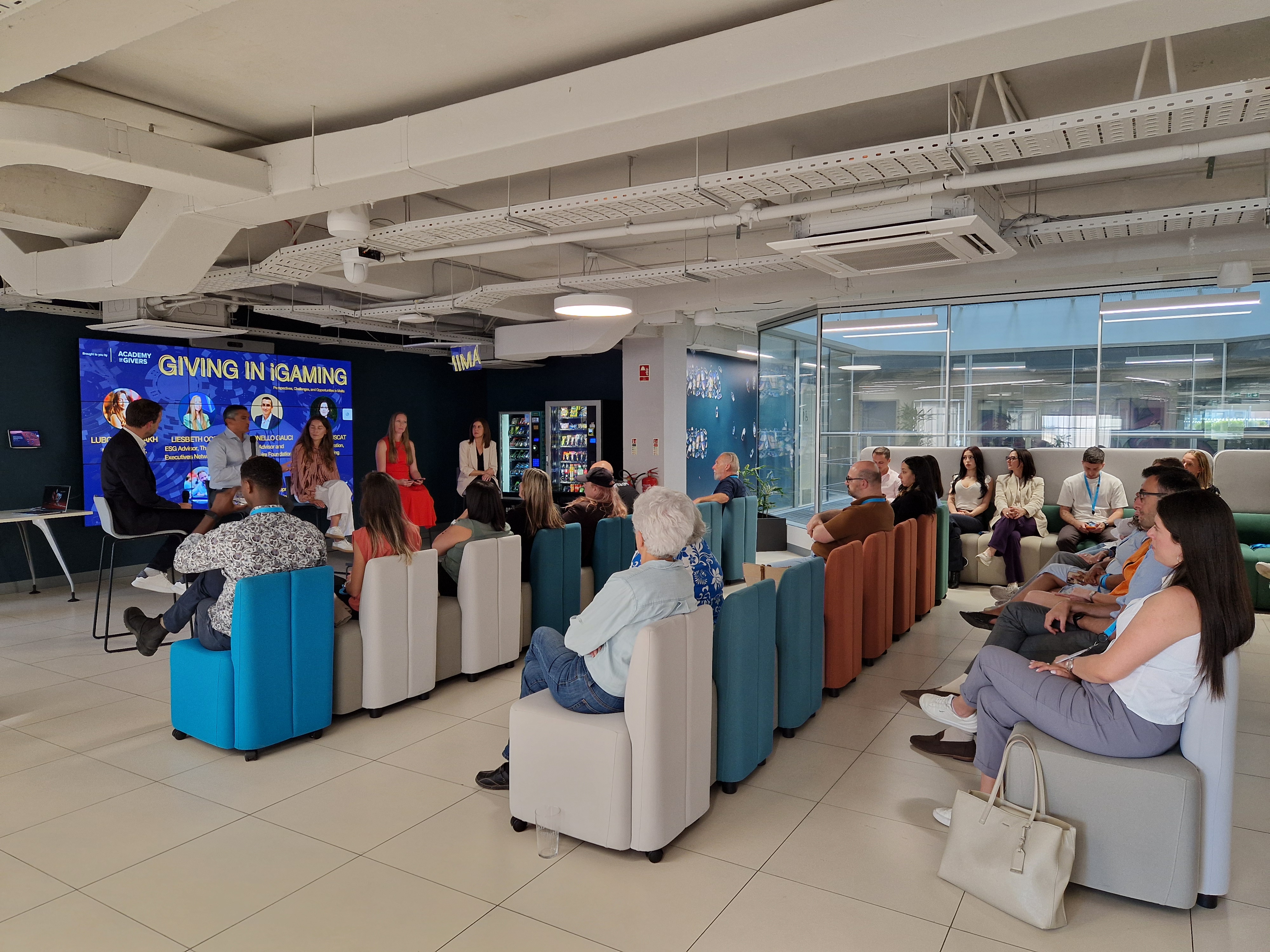
Academy of Givers in collaboration with Flutter Entertainment recently hosted an insightful panel discussion exploring how Malta’s iGaming sector approaches giving, CSR, ESG, and community engagement.
Titled “Givingin iGaming: Perspectives, Challenges & Opportunities in Malta”, the discussion brought together voices from across the industry, ESG space, and NGO sector to examine not only the opportunities for positive impact, but also the realities and trade-offs companies face in a fast-moving and highly scrutinised industry.
Moderated by Julien Liarte from Flutter Entertainment, the conversation reflected a broader shift taking place within Malta’s corporate landscape: a growing recognition that giving is no longer simply about donations, but about creating meaningful, measurable, and long-term impact.
One of the strongest themes throughout the discussion was the role that giving plays in shaping organisational culture and employee engagement. Panellists highlighted how younger generations entering the workforce increasingly expect employers to demonstrate social responsibility and meaningful engagement with the wider community.
Roberta Cauchi Muscat from Amusnet Gaming explained how employee involvement is central to the company’s approach. Rather than imposing initiatives from the top down, employees are encouraged to identify causes they care about personally. This reflects a wider expectation among younger professionals that businesses should actively contribute to society, not operate in isolation from it.
Liesbeth Oost, representing iGen Network, echoed this sentiment, noting that volunteering and community engagement help employees connect with realities outside the office environment. Businesses ultimately serve people and communities, and engaging directly with social causes creates stronger awareness, empathy, and human understanding.
Lubov Stelmakh from BGaming also highlighted volunteering as a powerful team-building tool that simultaneously contributes to a greater social purpose, reinforcing the idea that giving can create value both internally and externally.
Another recurring theme was the growing importance of long-term partnerships between businesses and NGOs. Antonello Gauci, Ceo of Inspire Foundation Malta and ESG Advisor, stressed that meaningful giving requires more than financial contributions alone. Mentorship, knowledge-sharing, and capacity-building within NGOs can create sustainable value that extends far beyond a single donation.
The discussion highlighted how strategic partnerships allow companies and NGOs to work together towards shared outcomes, ensuring that resources are used effectively and transparently to maximise impact on society. At the same time, panellists acknowledged that many companies, particularly smaller and medium-sized businesses, still face challenges in formalising CSR or ESG strategies. Smaller organisations may not have dedicated CSR departments, making employee participation, time constraints, and operational pressures difficult to balance alongside commercial priorities.
The discussion also explored how ESG reporting frameworks and regulatory expectations are increasingly shaping the way companies approach giving. Liesbeth noted that companies today are placing greater emphasis on measuring and reporting ESG impact, not only to satisfy compliance requirements, but also to demonstrate tangible value internally and externally. This includes measuring how social impact initiatives influence employee wellbeing, engagement, and retention.
Other panellists observed that expectations from regulators, clients, suppliers, and employees are steadily increasing. Businesses are no longer evaluated solely on financial performance, but also on how they contribute to wider society and community wellbeing.
However, the panel also addressed some of the unique challenges facing the iGaming industry specifically. Due to strict regulations and reputational sensitivities, companies must navigate concerns around greenwashing and carefully consider which causes they support, particularly when vulnerable groups or mental health-related initiatives are involved. As Liesbeth explained, this often pushes companies toward “safer” causes such as environmental initiatives, animal welfare, or community volunteering projects. While these may appear less controversial, they still contribute meaningfully to strengthening community involvement and employee engagement.
One of themost hopeful takeaways from the evening was the sense that collaboration across the industry is increasing.
Panellists agreed that iGaming companies in Malta are becoming more willing to work together on social impact initiatives, driven partly by ESG requirements but also by a growing awareness that collective action can create significantly greater impact than isolated efforts.
Liesbeth highlighted the importance of creating clearer examples of what effective giving looks like within the industry, as well as developing stronger shared understanding around best practices for volunteering, partnerships, and community contribution.
Roberta added that there is significant potential for the industry to collaborate more closely on shared initiatives, partnerships, and community projects that extend beyond individual corporate efforts.
The discussion concluded with reflections on what the future of giving in iGaming in Malta could look like. Panellists expressed hope for:
- fewer one-off donations,
- stronger long-term partnerships,
- greater employee involvement, and
- more strategic collaboration across the sector.
Ultimately, the evening reinforced a message increasingly present across Academy of Givers initiatives: meaningful giving is not only about generosity, but about building relationships, trust, transparency, and shared responsibility for the communities in which businesses operate.

Privacy Notice

.png)
