


Apr 20, 2026
Apr 20, 2026
Malta: Can We Give Better? Setting the Tone for Strategic Philanthropy
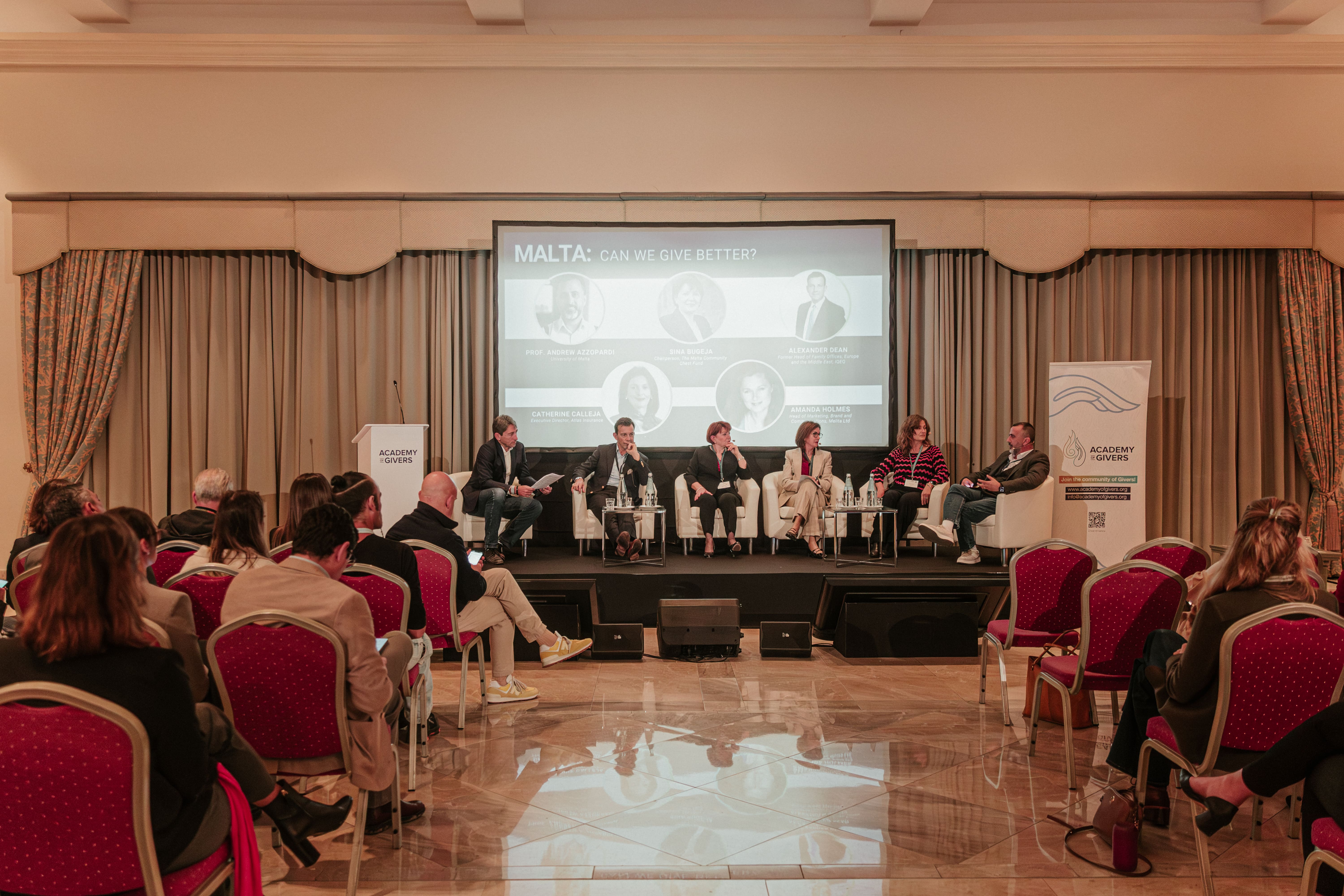
The opening panel of our Annual Conference 2026 brought together diverse voices from across Malta’s philanthropic ecosystem to explore an important question: can we give better as a country?
The opening panel of the Academy of Givers Annual Conference & Impact Fair 2026 brought together leading voices from across Malta’s philanthropic landscape to explore a question that sits at the heart of the sector’s future: can we give better as a country?
Sitting on the panel were Prof. Andrew Azzopardi from the University of Malta, Faculty of Social Wellbeing; Sina Bugeja, Chairperson of the Malta Community Chest Fund; Catherine Calleja, Executive Director of Atlas Insurance; Amanda Holmes, Head of Marketing, Brand and Communications at Melita Ltd. and Alexander Dean, Former Head of Family Offices - Europe and the Middle East at IQEQ. Moderating the discussion was Academy of Givers' Chairperson Nathan Farrugia.
From the outset, the discussion reflected both confidence in Malta’s strong culture of generosity and a shared recognition that the way giving is approached must continue to evolve. The conversation moved beyond whether people are giving enough, and instead focused on how giving can become more thoughtful, more coordinated, and ultimately more impactful.
One of the central themes was the role of storytelling in fundraising. While traditional approaches have long relied on personal stories to inspire donations, panellists reflected on how this narrative can shift. Rather than focusing on need alone, there is growing space to highlight solidarity, collective action, and the tangible outcomes made possible through giving. Storytelling, in this sense, remains essential, but its role is expanding into one that builds trust, demonstrates impact, and enables people to engage in a more informed and meaningful way.
Closely linked to this was the importance of adopting a more strategic approach to giving. Across the panel, there was clear alignment that philanthropy today requires intention and structure. Whether at the level of businesses, foundations, or individuals, setting priorities and aligning efforts with broader frameworks such as the Sustainable Development Goals allows contributions to go further. Strategic giving is not simply about organisations; it is about ensuring that resources are directed where they can create the greatest and most sustainable impact.
The conversation also turned to the broader ecosystem in which giving takes place. Malta’s voluntary sector is both active and diverse, yet there are opportunities to strengthen how different actors connect and collaborate. Panellists noted that improved visibility across initiatives could help reduce duplication, identify gaps, and ensure that resources are more evenly distributed. This is particularly important for smaller organisations, which often carry out critical work but may have less access to structured funding or visibility.
Alongside this, a range of mechanisms for supporting more sustainable giving were explored. From charitable foundations and structured funds to project-based funding models and newer tools such as crowdfunding and social impact bonds, the discussion highlighted that there is no single pathway forward. Rather, a combination of approaches can help build a more resilient and responsive system that supports both immediate needs and long-term impact.
At the same time, the panel emphasised that as systems become more structured, the human dimension of giving must remain central. Philanthropy is not only about financial contributions; it is also about relationships, empathy, and a shared sense of responsibility. Preserving this connection between those who give and those who benefit is essential in maintaining a culture of giving that is both effective and meaningful.
The role of different stakeholders was also a key part of the discussion. Businesses were recognised not only as contributors but as influential actors capable of engaging employees and shaping wider community impact. Foundations can provide focus and independence, while the government has an important role to play in enabling frameworks and supporting the measurement of national impact. Individuals, too, remain at the core of the ecosystem, with opportunities to engage through both structured giving and everyday actions.
As the panel drew to a close, the message was clear: Malta has strong foundations on which to build. The opportunity now lies in evolving from generosity alone to a more connected, strategic, and informed approach to giving.
Giving better is not simply about increasing contributions—it is about ensuring that every act of giving is guided by purpose, collaboration, and a clear vision for impact.
%20(1)%20(1).jpg)
Privacy Notice

.png)
